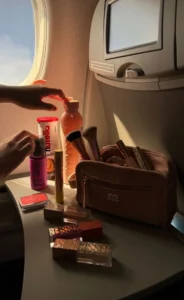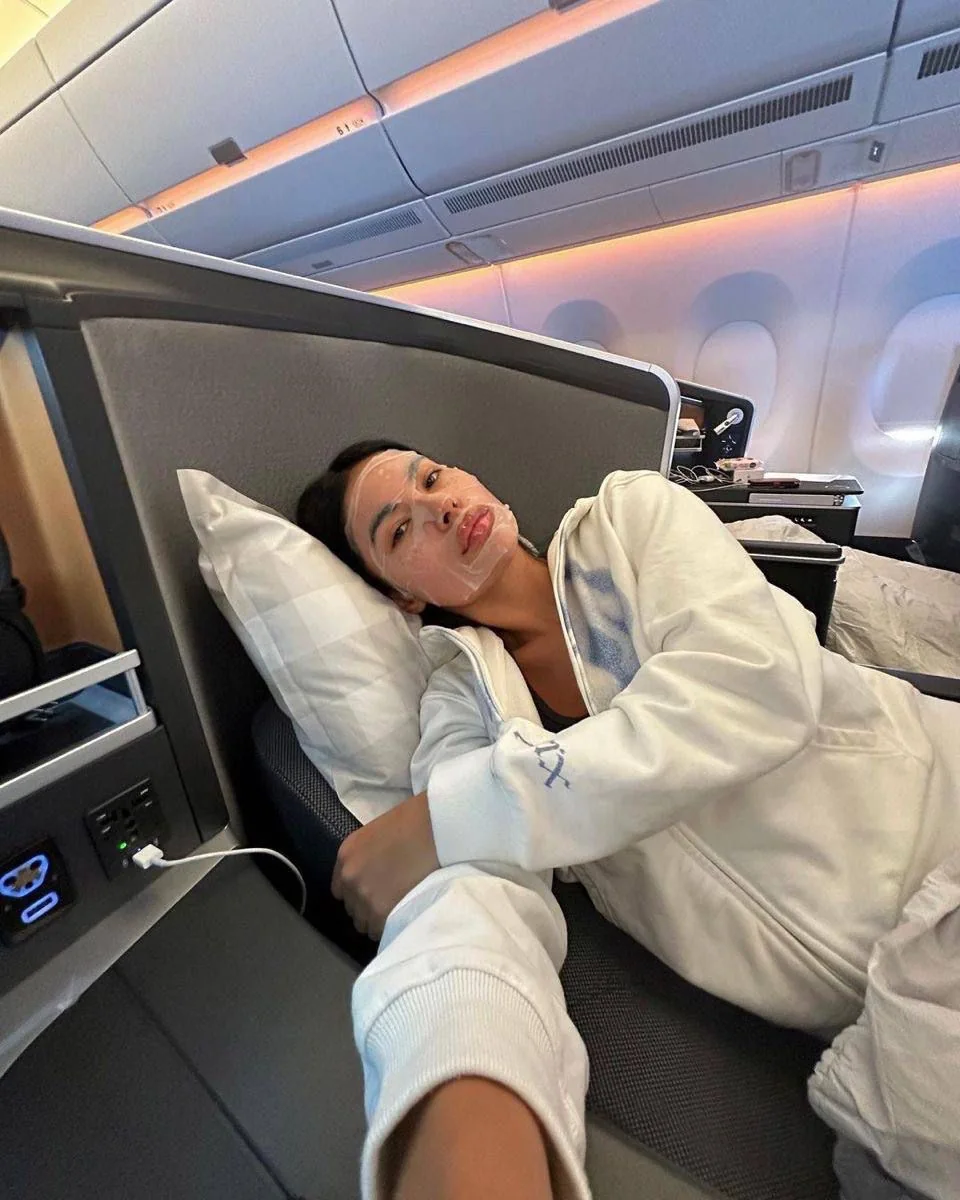
Twelve hours in, the lights dim and you catch your reflection in the window: tight, a little dull, maybe a dry patch or two. It isn’t you. It’s the air.
Why cabin air dries skin out
At cruising altitude the air outside is so cold it holds almost no moisture. The air pumped into the cabin is warmed and pressurised, but warming air doesn’t add water to it. On a typical flight, cabin humidity sits somewhere between 10 and 20 percent. A comfortable room at home is usually 40 to 60 percent. Even the Sahara averages about 25.
Newer aircraft such as the 787 and A350 can run a little more humid, but it’s still far drier than your skin is used to. On a long flight, that steady dryness draws moisture from the surface of your skin hour after hour. Add recycled air, broken sleep and the salty airport meal, and you land feeling it.
The good news: you don’t need a ten-step routine. You need a few small things, done at the right moments.
Before you board: what to do at home
Go in prepared, not heavy. The night before, keep it simple: cleanse, moisturise, sleep. It isn’t the night for a new active or a strong exfoliant. Freshly exfoliated skin tends to feel drier and more reactive in a dry cabin.
Travel bare-faced if you can. Wearing less makeup on board makes the in-flight steps quicker and more comfortable. If you’d rather not, choose something light you can wipe away easily.
Drink water before you leave for the airport, and pack an empty bottle to fill after security. Skin isn’t hydrated by drinking alone, but feeling well overall makes the whole journey easier.
Pack your steps where you can reach them. Nothing breaks a ritual like a bag in the overhead locker. Keep your pouch in the seat pocket or under the seat in front.
In the air: timing each gate of the routine
Think of the flight in three parts: settling in, the long middle and the descent.
Settling in (after the seatbelt sign goes off). Start with clean hands, then a gentle wipe to remove the day and the airport. Finish with a light mist and give your skin a minute before anything else. This is Gates 01 to 03 on your boarding pass, and it takes about as long as the safety demonstration.
The long middle (after the first meal service). This is your in-flight moment. On a long-haul flight there’s usually time for a hydrogel face mask. Pop it on once the cabin lights go down, settle back and let it sit for the time on the pack. Short on time, or would rather not be seen in a full mask? Eye patches give you the same pause in a smaller dose.
Seal it in. When the mask comes off, pat in what’s left, then smooth on a thin layer of a rich moisturiser. Thin is the key: a heavy layer in dry air can feel tacky rather than comfortable.
Little and often. Over the rest of the flight, a light mist and a touch of lip mask whenever your skin feels tight does more than one big application at the start.
Landing: the five-minute reset
About an hour before landing, while everyone else queues for the bathroom, do a quick reset from your seat:
- Clean hands.
- A light mist.
- A thin layer of moisturiser where your skin feels driest.
- Lip mask — the step everyone forgets.
Once you’re at your destination, have a proper cleanse, a glass of water and, if you can, some daylight. Then, unless your skin asks for more, go back to your usual routine.
The short version
Cabin air is dry, so small amounts, little and often, beat one big routine at the start. Keep your steps within reach, do them in order, and save the bathroom queue for someone else.
Our Hydration Kit packs each of these steps in order, in one frosted pouch, with a boarding pass to guide you.